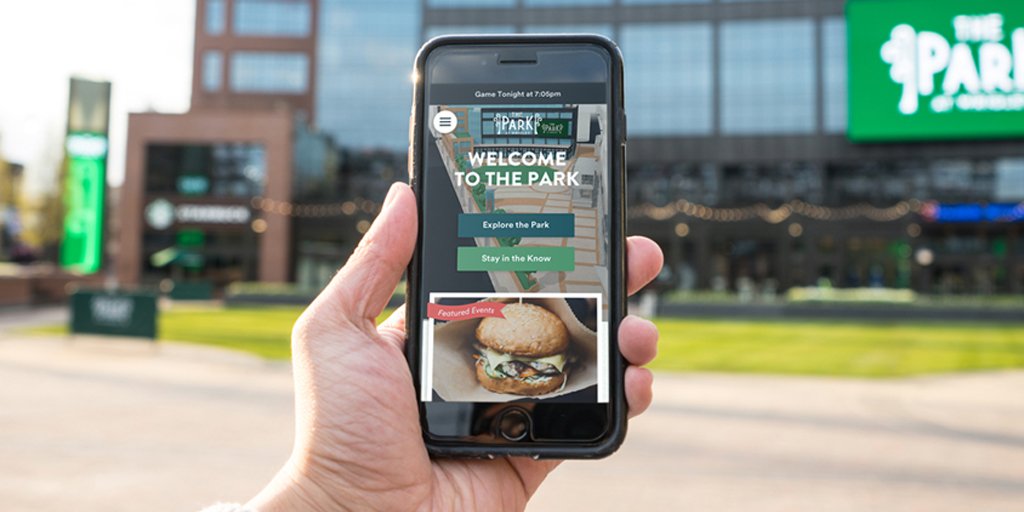
A WebGL experience that made Chicago's iconic Wrigley Field development feel real before you arrived.
Gallagher Way, the mixed-use development surrounding Wrigley Field, needed a digital experience that matched the ambition of the physical space. The venue wasn't a standard commercial property. It was an entertainment destination tied to one of the most iconic locations in American sports. A standard website with floor plans and contact forms wasn't going to communicate what the space actually felt like or drive the kind of engagement the client wanted.
The client was explicit: they wanted to push. The digital presence needed to feel like an experience, not a brochure. Early conversations made it clear that the gap wasn't informational. Prospective tenants and visitors could get the facts anywhere. The gap was emotional. Nothing in the existing digital landscape conveyed the energy and scale of the development in a way that made people want to be there.
We started with traditional web frameworks, building interactive layouts and map-based navigation using conventional front-end approaches. The results were functional but flat. They communicated information without conveying any sense of place. For a development built around experience and atmosphere, "functional but flat" was a failure state. The client pushed back, and rightly so.
We moved to WebGL, building a fully interactive 3D experience that let users explore the development spatially. This was an investment in what was possible with browser-based rendering at the time, pushing the boundaries of what a web experience could feel like without requiring downloads or plugins. Users could navigate the space, explore venues, and understand the development's layout in a way that static pages or traditional maps couldn't deliver.
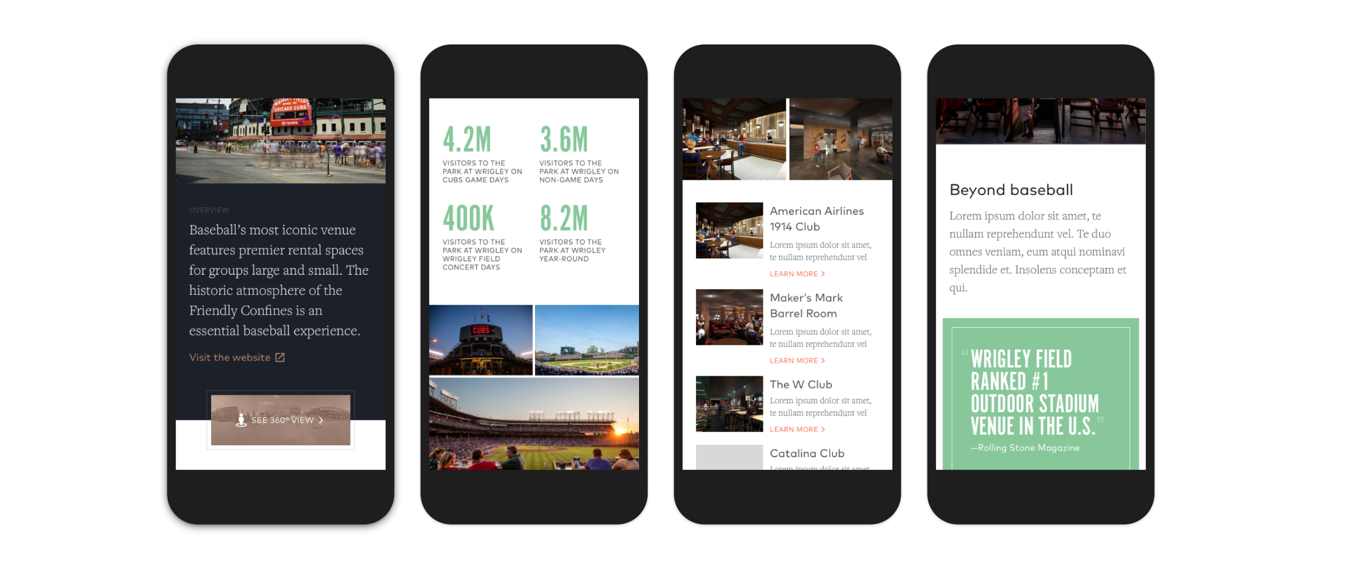
Mobile-optimized experience
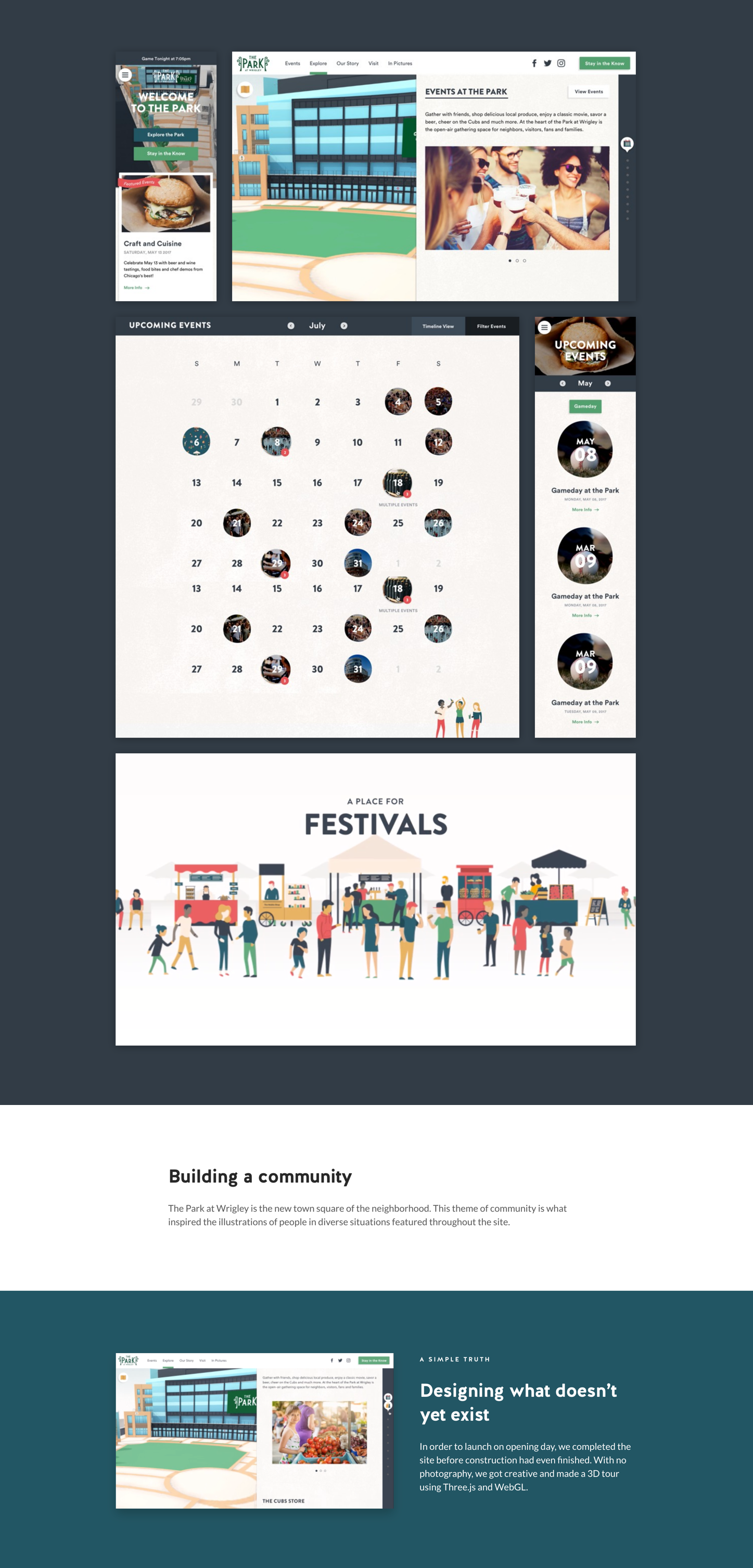
Interactive venue exploration
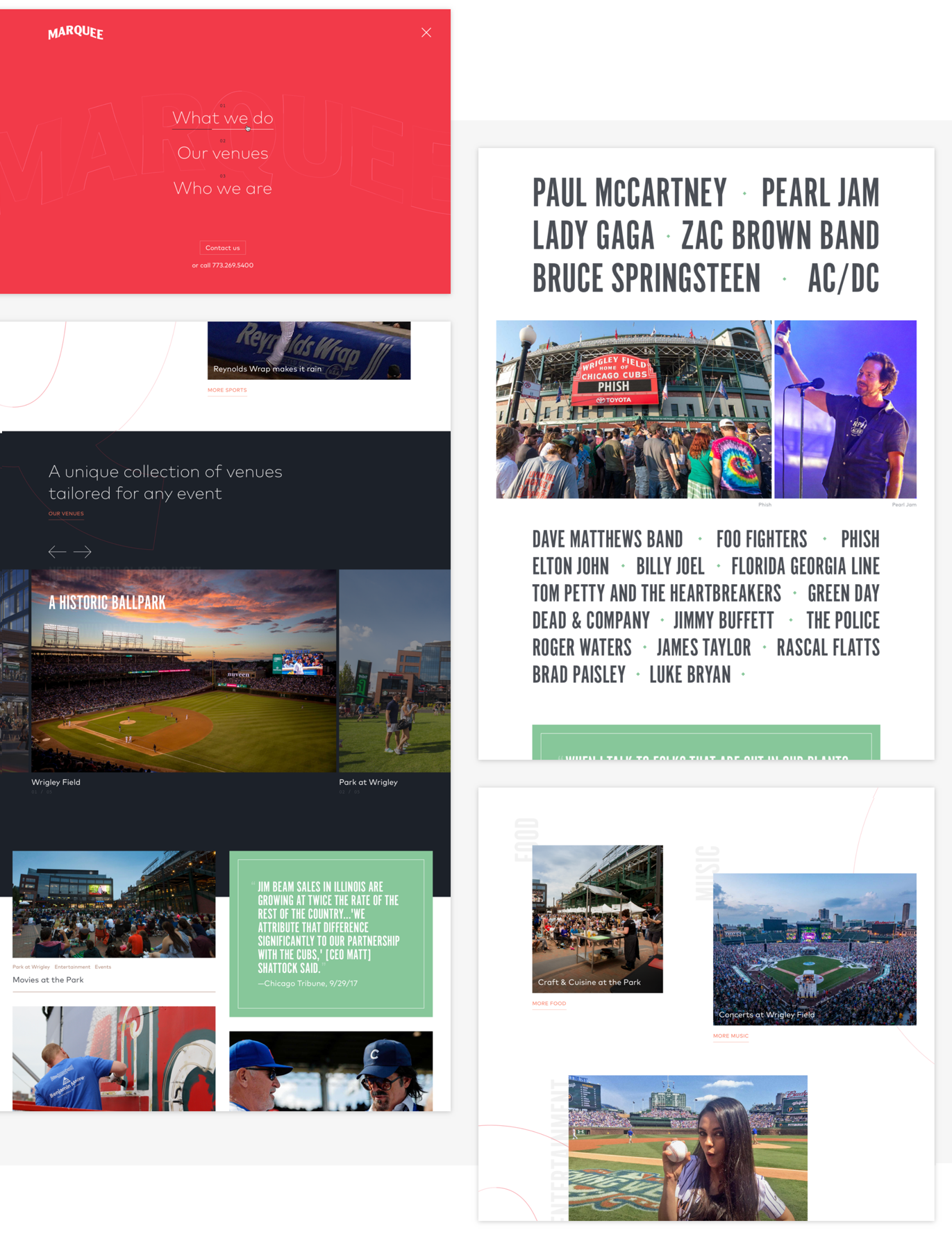
Event marquee and calendar
Success was measured by engagement. Users spent meaningfully more time interacting with the WebGL experience compared to industry benchmarks for commercial real estate sites. The experience became a differentiator for the property itself, demonstrating that the development was as forward-thinking digitally as it was physically.