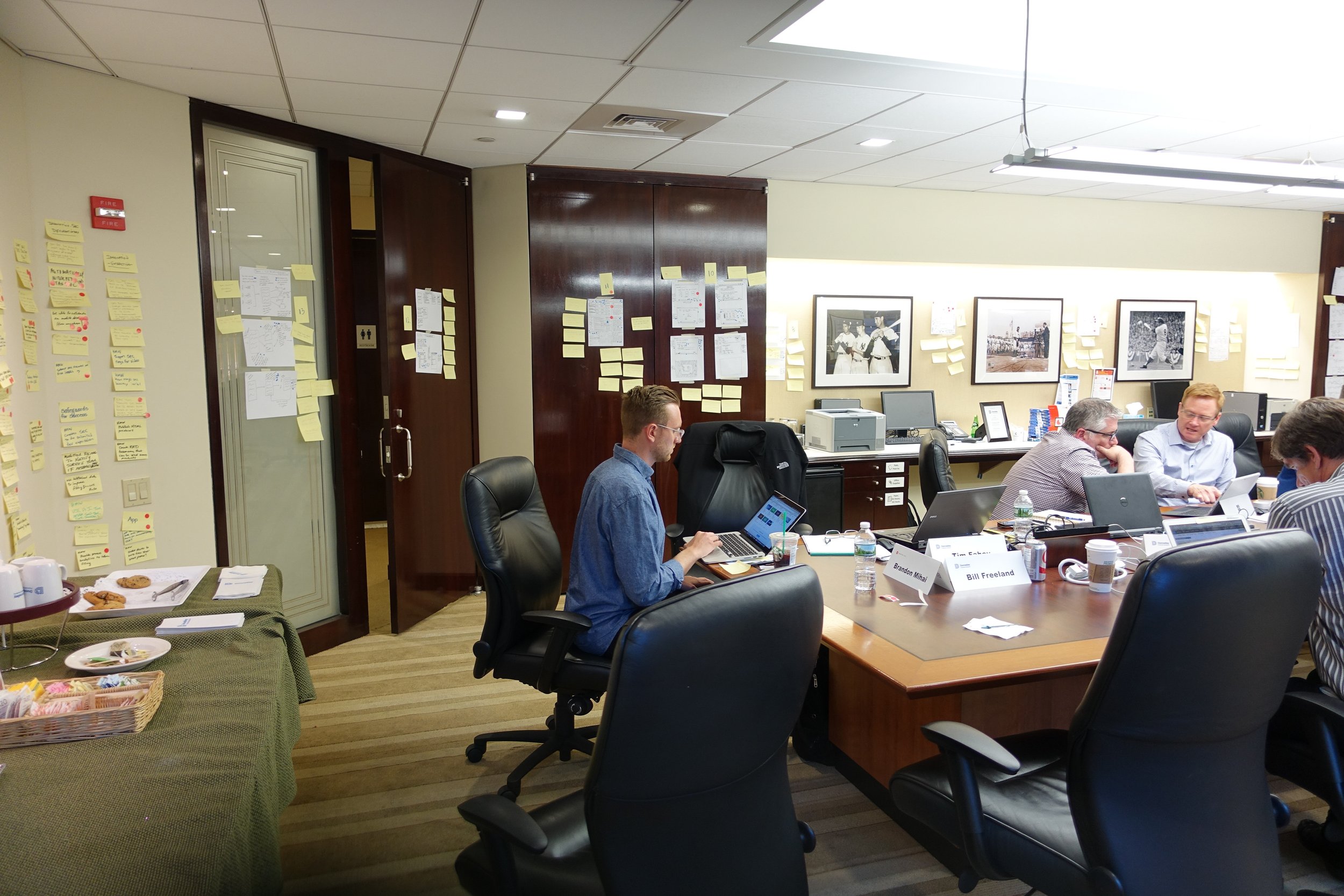
Design sprint workshop with cross-functional stakeholders
A comprehensive digital transformation that reduced SEC filing times from weeks to hours by replacing function-based workflows with exception-driven design.
Donnelly Financial's tools handled SEC filings and Sarbanes-Oxley compliance for Fortune 500 companies. They worked, but they were slow. Filing cycles stretched across weeks, involving dozens of fragmented applications, manual handoffs, and function-based workflows that required users to move through every step regardless of relevance.
Then the regulatory environment changed. Reporting that had been annual shifted to monthly. The existing process wasn't just inefficient anymore. It was structurally incompatible with the new requirements. What took weeks now had to happen in days.
We conducted stakeholder interviews across business units and analyzed filing time benchmarks. The data confirmed what users were already telling us: the tools forced linear, function-based workflows that couldn't scale to monthly cadence. Teams were spending the majority of their time navigating the system rather than doing the actual compliance work. Internal benchmarks showed the gap between current performance and the new regulatory timeline was not something incremental improvements could close.
Design sprint workshop with cross-functional stakeholders
Our first approach was a guided wizard flow, a step-by-step process that would walk users through filings in sequence. It tested well for simple cases but collapsed under the complexity of real-world SEC filings where multiple teams work on overlapping sections simultaneously. The wizard imposed a rigid sequence on work that was inherently parallel and exception-driven.
We designed enterprise-class responsive web applications built around exception-based workflows. Instead of walking through every function, users saw only what required their attention. The system surfaced exceptions, flagged anomalies, and let teams work in parallel on the sections that mattered.
Key capabilities included inline editing, real-time reporting, document redlining with compare modes, inline commenting with context tracking, and personalized role-based workspaces. We consolidated dozens of applications into a streamlined experience using design thinking methodology and Google Ventures Sprint process, bringing executive leadership and subject matter experts together in focused sprint cycles.
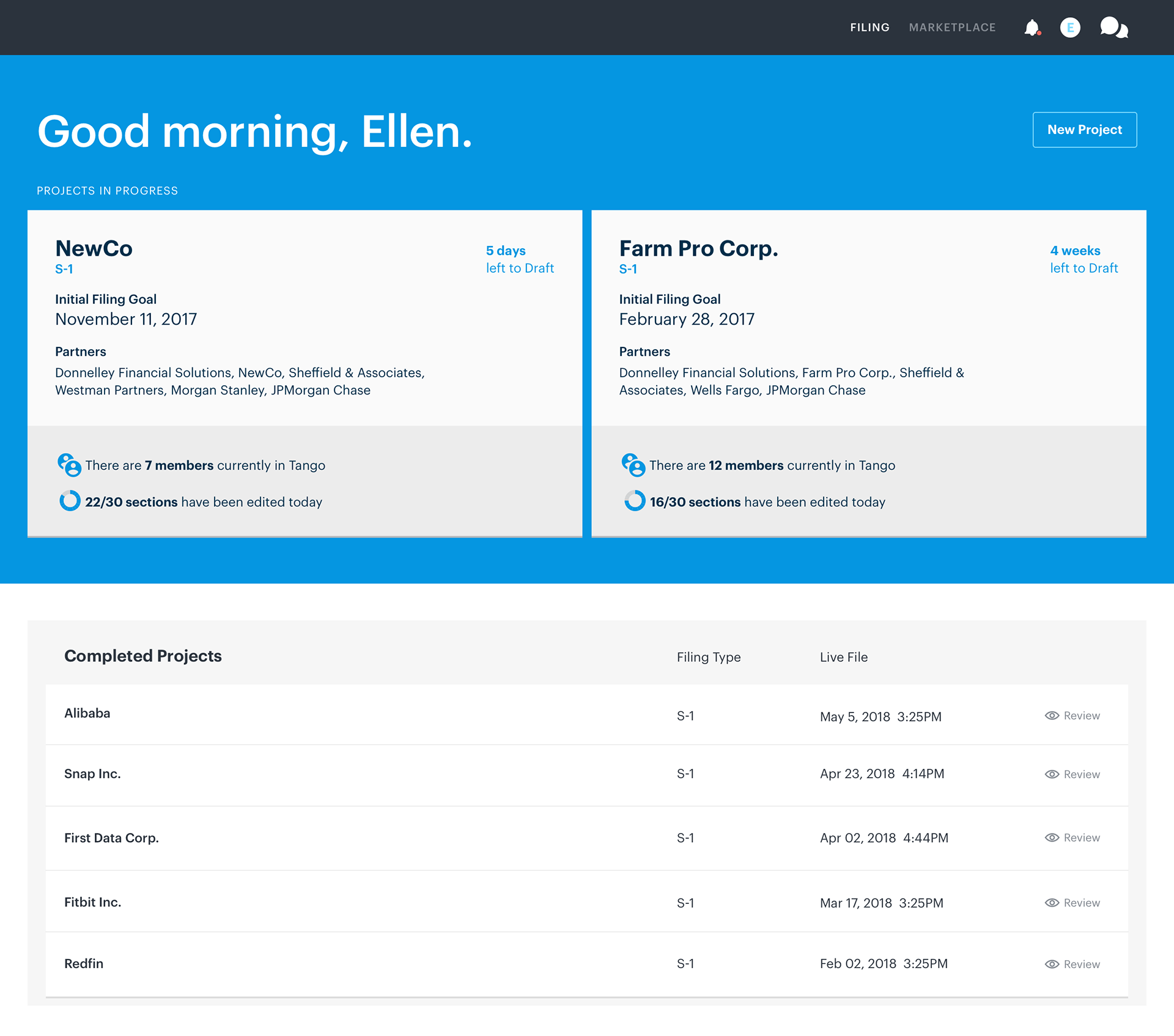
Personalized employee workspace dashboard
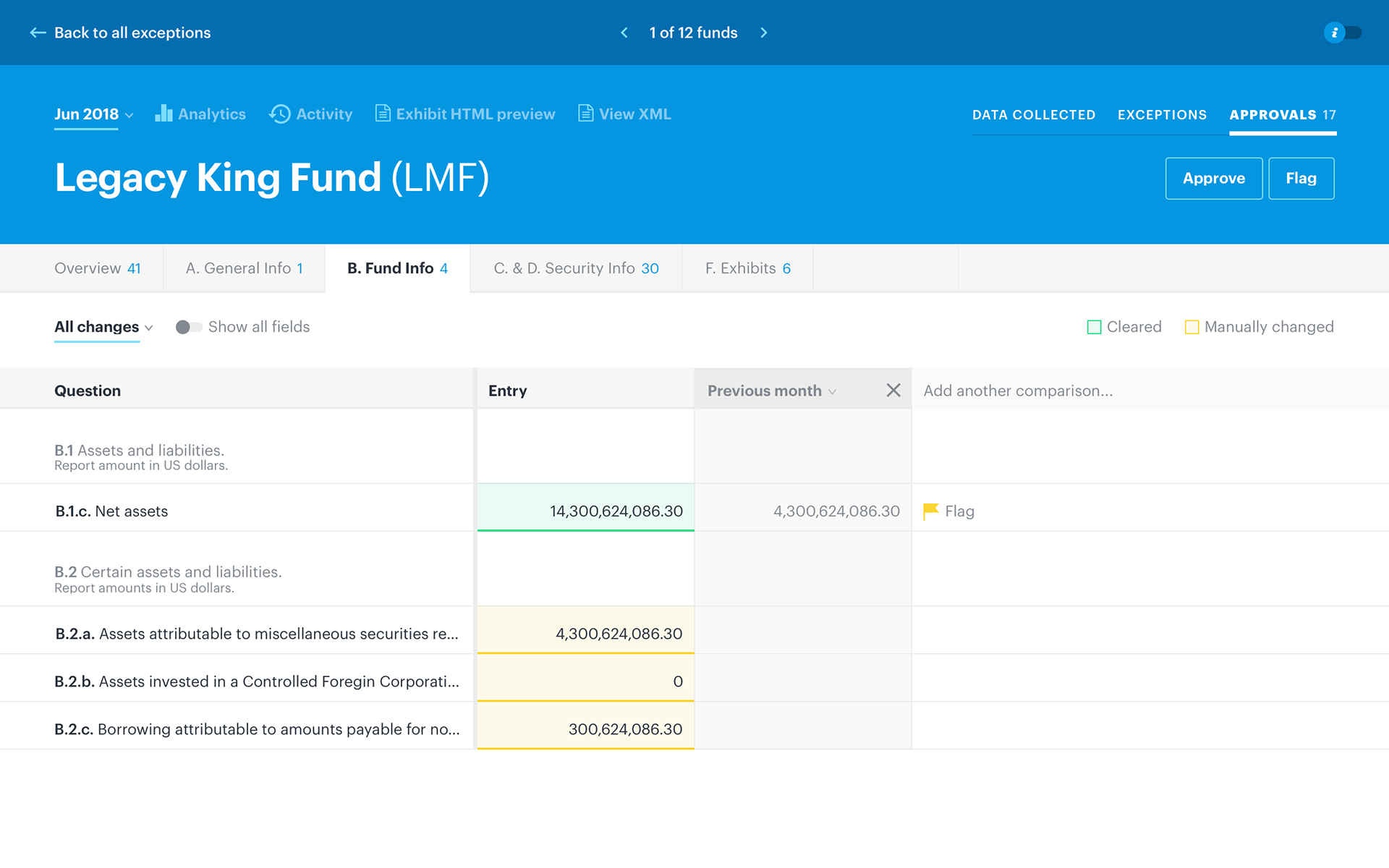
Inline spreadsheet editing for SEC filings
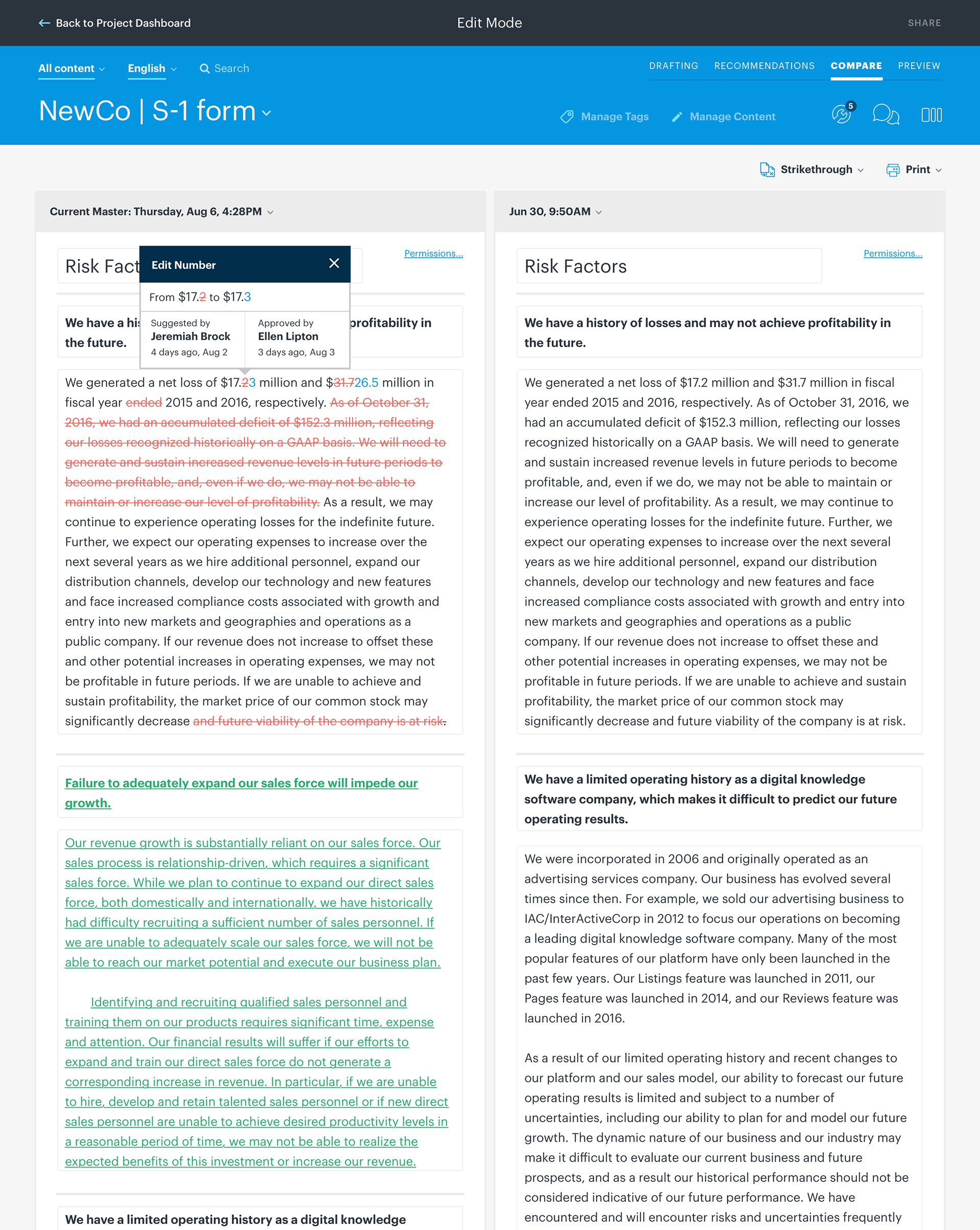
Document editing with redline and review modes
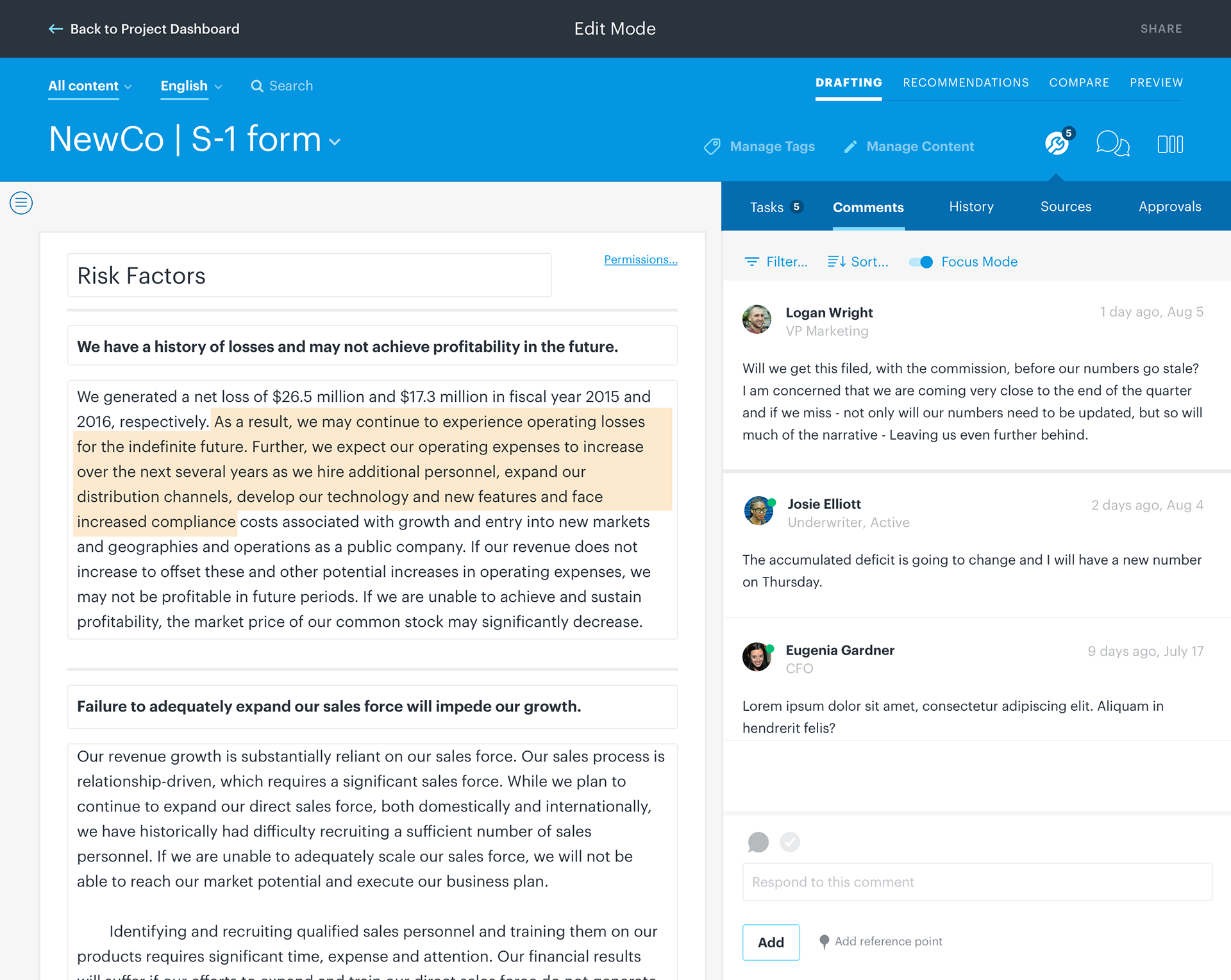
Contextual commenting and collaboration
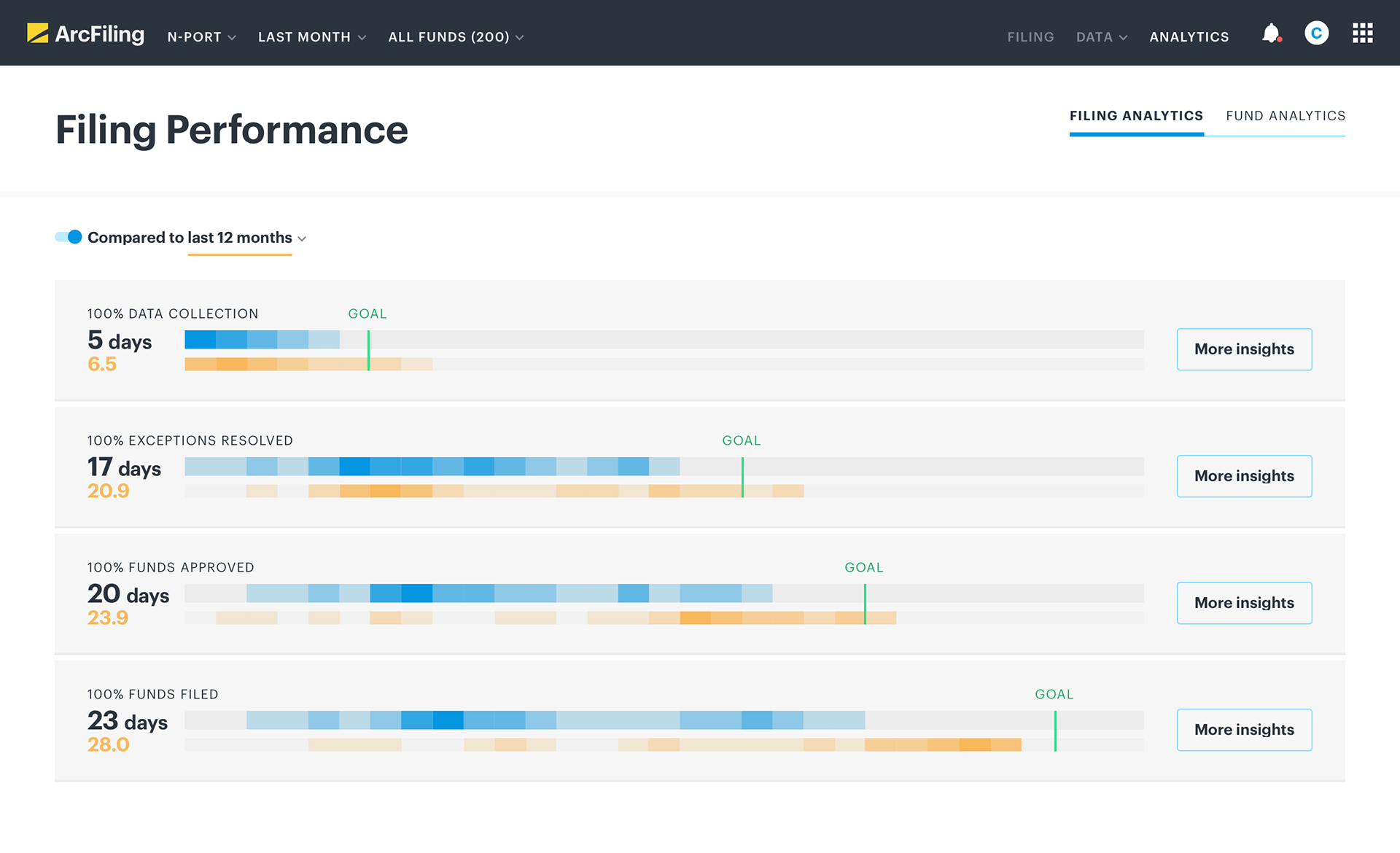
Real-time filing performance and analytics dashboard
Filing times dropped from weeks to hours. This was validated against both internal benchmarks and customer-reported timelines. More importantly, the new design made monthly filing cadence viable, something the previous system could not support at all. Business unit R&D spend decreased, dozens of legacy workflows were retired, and both time-on-task and user satisfaction scores improved measurably.