TL;DR
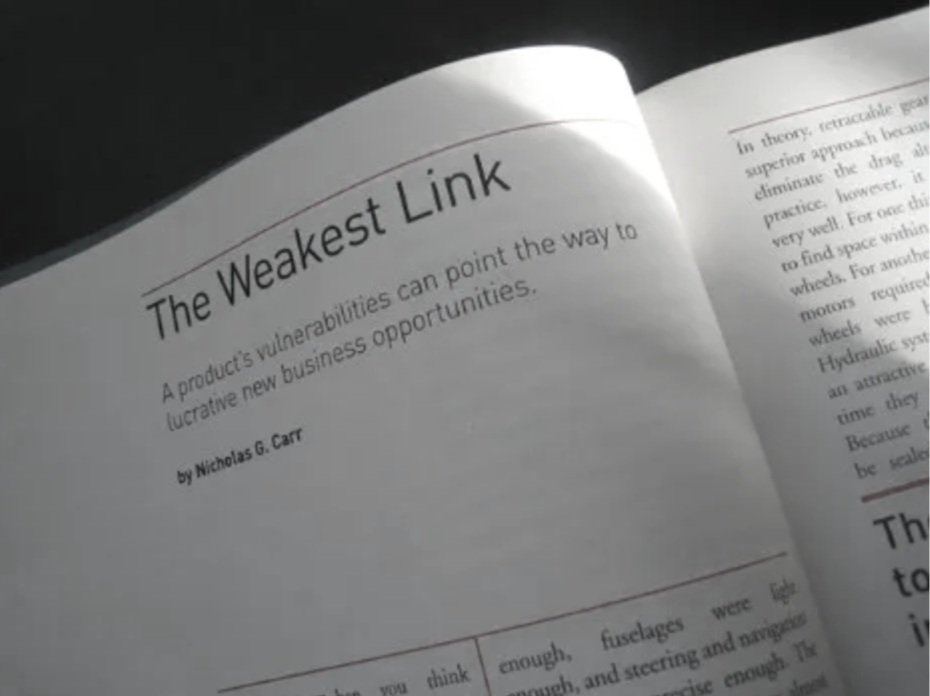
"Reverse salients" — military shorthand for the weak points in an advancing line — translate directly to business: a system's biggest vulnerabilities are often its biggest opportunities. In software, the most persistent reverse salient is poor user experience. Companies that fix the friction others ignore don't just improve a product; they unlock economic value the whole market was leaving on the table.
Economic value remains hidden within product and service vulnerabilities. Discovering how to unlock this value can establish powerful, profitable enterprises. Historically, two approaches have dominated: closed systems (Apple, Sony) and open systems (Linux, web technologies). Neither proves universally superior.
The concept of "reverse salients" originates from military strategy, referring to sections of advancing forces that lag behind, creating weak points that impede overall progress. Identifying these vulnerabilities reveals untapped business opportunities.
Historical Examples
History illustrates this through multiple cases:
- Rubber o-rings enabled commercial aviation breakthroughs that industry leaders initially overlooked
- Westinghouse's acquisition of Nikola Tesla's alternating current patents proved superior to Thomas Edison's direct current for long-distance transmission
- iPod and iTunes simplified MP3 adoption by addressing existing friction points
- Microsoft's browser adoption responded to internet-era reverse salients, though creating new security vulnerabilities
Software Development Challenges
Three critical questions emerge:
- How do you identify reverse salients before competitors?
- Once discovered, how are they resolved?
- How can you predict and prevent future vulnerabilities?
Closed vs. Open Systems
Closed systems require visionary leadership but risk overlooking critical weaknesses. Open systems leverage external expertise but risk commoditizing intellectual property and settling for mediocrity.
The most successful approach appears hybrid: protecting intellectual capital while maintaining ecosystems that enhance value beyond internal capabilities.
Current Focus
The most valuable reverse salient in software involves poor user experience, which stifles economic value release. Companies must strategically prioritize experience design tools and developer-designer integration to remain competitive.
Sometimes the weakest link is the biggest opportunity. Understanding how to identify and capitalize on system bottlenecks separates successful entrepreneurs from the rest.